


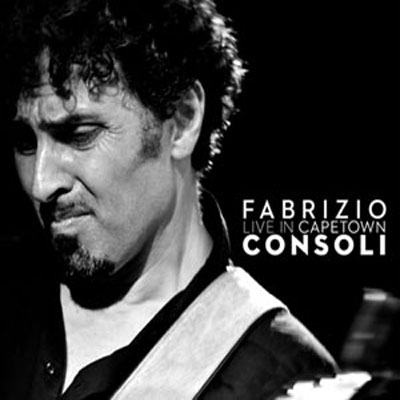

FABRIZIO CONSOLI
LIVE IN CAPETOWN

Available on:
CD€ 15
Tape / Cassette€ 15
Reel / Bobina*€ 90
Available on all major digital platforms. 


* Available in all formats (2-4 tracks) and speeds. The correct format can be selected on check out
* Disponibile in tutti i formati (2-4 tracce) e velocità. Nel check out sarà richiesto il formato desiderato.
Video
Info:
Italiano
Live In Cape Town - Il nuovo disco live di Fabrizio Consoli
C'era proprio bisogno di un altro disco Live? Calma, andiamo per ordine.
La Storia. L’idea di un “Live” è del Febbraio 2010, quando io, Paolo Santoli e Dario Zigiotto, siamo alla ricerca di qualcosa che dia luce al mio progetto che, dopo una prima fortunata serie di concerti, rischia di trovarsi al buio, senza continuità di sorta. Dario, che ha già sperimentato la soluzione, se ne esce con un devastante “Facciamo un disco dal vivo”. Vedendo nei i miei occhi un unico, grande punto di domanda, Paolo mi dice che questo servirà fondamentalmente a formare e testare la tenuta di una squadra che lavori sotto più profili, e che sia in grado di fornire ai media motivi di interesse, in attesa della pubblicazione di un disco di nuove canzoni. Discorso più che sensato, penso. Nel Novembre precedente avevo traslocato lo studio nel palazzo attiguo al Cape Town Cafè. Una sera, vedendo una band suonare dietro le vetrine, mi viene l'idea di trattare una serata. Almeno, mi dico, con la benza siamo a posto. Quando Giancarlo, uno dei soci proprietari,
mi dice che, sì, è solito regalare una serata ai suoi clienti ogni tanto, ma a patto che sia jazz, non mi arrendo, e dopo un paio di mesi gli porto una copia di Musica Per Ballare. A lui piace così tanto che nel giro di una settimana me ne chiede altre 20 per i suoi amici!! Per un lungo periodo non riesco più a pagare un caffè. Per concludere, porto Paolo e Dario al Cape Town, e la passione e la disponibilità di Giancarlo, l'atmosfera calda e informale del bar, unite all'idea di registrare in un luogo assolutamente non “deputato” né a un concerto, né tantomeno a una presa sonora professionale, ci conquistano. Con, molta immaginazione, e un pizzico di follia, davanti a un caffè, decidiamo: il 4 e 5 maggio, alla fine del tour, si registra il disco “dal vivo”.
“Registrare” Il Cape Town. Il Cape Town Café, è un locale fatto a L, sul lato lungo c'è il bancone. E' stato necessario montare lo studio mobile nell'angolo all'estremità superiore di questo lato, prima della cucina. In questo modo il nostro fonico, Alessandro Ciola di Imagina Production, trovandosi alle nostre spalle è riuscito a lavorare fuori dal fuoco delle casse che sono servite all'ascolto diretto del concerto. Abbiamo scelto, anche per una questione di spazio, di isolare il meno possibile gli strumenti, così che in ogni pista fosse possibile trovare una componente degli altri strumenti e, cosa più importante, del suono del locale e della strada. Chiacchiere, brindisi, bicchieri, tazzine e ordinazioni, risse (un paio, almeno), tutto insomma. Insieme agli strumenti, nel disco “suona e respira” il locale e il pubblico della serata, che più o meno folto a seconda del momento, è formato da un misto eterogeneo di amici, aficionados aderenti al mio gruppo Facebook, curiosi, passanti e habitué del CapeTown, assiepato intorno al “palco” e per strada. Qualche parente. Modestamente infatti, a 47 anni posso vantare di non essere ancora stato scoperto dal grande pubblico.
Un Disco Di Strada. Se ogni “Live” è, metaforicamente, un disco di strada, in questo caso siamo di fronte a un disco veramente di strada. Letteralmente. Il palco era un tappeto rosso steso nel bar, le ampie vetrine spalancate, per permettere l'ascolto e la partecipazione a più gente possibile, fino all'altro lato di via Vigevano. La musica era ovunque, con Marco che, come suo solito, girava come una mina vagante per tutto il concerto, e che a un certo punto suonava davvero per strada (e non so come facesse ad andare a tempo), momento immortalato da Alberto in Canzone Intelligente con un laconico “è sempre fuori”.. Mi piace pensare che la musica arrivasse fino a Porta Genova, aggrappandosi ai treni, solo per il piacere di fare altra strada.
La Filosofia. Sono fermamente convinto che solo nella sincerità dell'imperfezione, e nel coraggio di accettarne la bellezza e l'unicità, si possa ancora trovare la forza per graffiare la scorza di un epoca anestetizzata da media e tecnologia. Ciò nonostante, l’atteggiamento del disco deve molto a Paolo Santoli, uomo di grande cultura rock, e alla sua visione musicale. Sin dall’inizio ci ha spinto ad avventurarci per sentieri mai battuti, fuori dall’asfalto delle stesure stabilite e dei clichè di genere, alla ricerca dei tesori inaspettati che il musicista, inconsapevolmente, nasconde sempre tra le dita. Il risultato è un disco di assoluta imperfezione, sporco, tecnicamente quasi miracoloso, ma ricco di irripetibili e mai provati spunti armonici e strutturali, deviazioni improvvise e improvvisazioni deviate, divertenti e strampalate, che hanno colto noi stessi di sorpresa, costringendoci ad avventurosi inseguimenti, e a non perderci di vista neppure per un istante. Il risultato è così naturale che lo abbiamo persino masterizzato a un livello di compressione /volume inferiore, per non perdere dinamiche e chiaroscuri. E' tutto lì da sentire.
La Formazione. Un ex contrabbassista come me può anche divertirsi a immaginarlo, ma a chiunque salta all’occhio la mancanza del basso. Il motivo è di assoluta praticità.
Quando nel 2008 io, Gigi Rivetti e Silvio Centamore, abbiamo iniziato a suonare all’estero, il manager mi disse che sarebbe servita una formazione più “agile”, per distinguere la proposta musicale, ma soprattutto per ridurre i costi. Infatti un trio può viaggiare benissimo in una sola macchina, praticamente con tutti gli strumenti che servono per il concerto. Wunderbar! Poi il caso ha messo Marco Milani (che suonava già con Gigi negli Statuto) sulla nostra strada, e al trio originario si è aggiunta l’espressività della tromba, senza nulla togliere allo spazio, vitale nei trasferimenti. Poi è davvero bravo.. tranne quando prova il bocchino, rischiando la defenestrazione, in macchina dorme sempre.
La Forza Dell’Amore. Anche l’idea di realizzare una versione de “La Forza” è stata discussa e presa a tavolino da manager e ufficio stampa, per dare al disco una chance promozionale, approfittando del fatto che la canzone, che è stata una grandissima hit ed è tuttora un classico, oltre, naturalmente, a quella di Eugenio e del grande Vittorio Cosma, porta anche la mia firma. Onestamente non credo sarei mai arrivato a pensare di interpretarla in un disco, fondamentalmente per una forma di pudore rispetto al talento vocale di Eugenio, e perchè, siccome non ho mai pensato un istante di cantarla senza di lui, mi dispiaceva un po’ disturbarlo. Ma ne abbiamo passate tante insieme, e così l’ho chiamato. E ora la sua voce ne La Forza, è la prova che la classe non è acqua.
Gli Ospiti. E’ comunemente accettato che la presenza di special guest contribuisca ad aumentare il “prestigio” di un'operazione discografica nonchè, e a volte in maniera determinante, alla sua promozione. Detto ciò, non credo assolutamente di sminuire lo spessore che i miei ospiti, Simona Bencini, Alberto Patrucco (che già avevano duettato con me in Musica Per Ballare) ed Eugenio Finardi, hanno aggiunto al disco se sottolineo che per me il piacere più grande- e l’onore- è, e sarà sempre quello di poter stare insieme a loro su un ”palco”, unito a quello di poter affermare che, seppure attraverso percorsi di vita e periodi diversi, e al di là di un lavoro che può separare per anni, siamo amici.
Per tornare alla domanda iniziale, non lo so. Non so se ci fosse bisogno di un ennesimo disco dal vivo, e non credo sia opportuno che io valuti in questa sede il mio disco. Quel che mi sento di poter affermare senza ombra di dubbio è che di dischi che contengano, nei presupposti e nella realizzazione, un atteggiamento se vogliamo, in una parola, d'altri tempi... si, credo ci sia un dannato bisogno.
English
Live In Cape Town – The New Live Album by Fabrizio Consoli
Did we really need another live album? Calm down, let’s take things in order.
The Story.
The idea of a “Live” album dates back to February 2010, when Paolo Santoli, Dario Zigiotto and I were looking for something that could bring some light to my project which, after an initial lucky series of concerts, risked falling into darkness, with no continuity whatsoever.
Dario, who had already experimented with this solution, suddenly came out with a devastating: “Let’s make a live album.”
Seeing the huge question mark in my eyes, Paolo explained that this would essentially serve to shape and test the strength of a team able to work on multiple levels, and capable of giving the media something to talk about while waiting for a new studio album.
A more than sensible argument, I thought.
The previous November I had moved my studio to the building next to the Cape Town Café. One evening, as I watched a band playing behind the big windows, the idea of negotiating a night there struck me. At least, I told myself, fuel-wise we’d be fine.
When Giancarlo, one of the owners, told me that yes, he does occasionally give his customers a free night – but only if it’s jazz – I didn’t give up. A couple of months later I handed him a copy of Musica Per Ballare. He liked it so much that within a week he asked me for twenty more copies for his friends!
For a long time after that I couldn’t manage to pay for a coffee anymore.
To make it short: I brought Paolo and Dario to Cape Town, and Giancarlo’s passion and availability, the warm informal atmosphere of the bar, combined with the idea of recording in a venue absolutely not “designed” for either a concert or a professional sound take, completely won us over. With a lot of imagination and a pinch of madness, over a coffee we decided: on May 4 and 5, at the end of the tour, we would record the “live” album.
“Recording” Cape Town.
The Cape Town Café is L-shaped, with the bar running along the long side. We had to install the mobile studio in the upper corner of that side, just before the kitchen. This way our sound engineer, Alessandro Ciola from Imagina Production, positioned behind us, could work outside the direct firing line of the speakers used for the concert monitoring.
We chose—also for space reasons—to isolate the instruments as little as possible, so that each track would contain some component of the other instruments and, more importantly, of the sound of the venue and the street.
Chatter, toasts, glasses, cups and orders, scuffles (at least a couple) – everything, really. Alongside the instruments, the bar and the audience “play and breathe” on the record: an audience more or less numerous depending on the moment, made up of a heterogeneous mix of friends, Facebook followers, the curious, passers-by and Cape Town regulars crowding around the “stage” and outside in the street. A few relatives.
Modestly, at 47 I can boast that I still haven’t been discovered by the general public.
A Street Album.
If every “Live” album is metaphorically a street record, in this case we are dealing with a truly street record. Literally.
The stage was a red carpet rolled out inside the bar, the big windows wide open to allow as many people as possible to listen and take part—even across the street, on the other side of Via Vigevano.
The music was everywhere, with Marco wandering around like a loose cannon throughout the concert. At one point he was literally playing out in the street (I still have no idea how he kept in time). Alberto immortalized the moment in Canzone Intelligente with a laconic: “He’s always outside.”
I like to think the music reached all the way to Porta Genova, clinging to the trains just for the pleasure of travelling a bit farther.
The Philosophy.
I am firmly convinced that only in the sincerity of imperfection—and in the courage to embrace its beauty and uniqueness—can we still find the strength to scratch the surface of an era anaesthetized by media and technology.
Nevertheless, the attitude of this album owes a great deal to Paolo Santoli, a man of deep rock culture, and his musical vision. From the very beginning he pushed us to venture down untrodden paths, off the paved roads of fixed arrangements and genre clichés, in search of those unexpected treasures musicians always unknowingly hide in their fingers.
The result is an album of utter imperfection: gritty, technically almost miraculous, but full of unrepeatable and previously untested harmonic and structural insights, sudden detours and wayward improvisations—funny and eccentric—that surprised even us, forcing us into adventurous chases and to never lose sight of each other for even a moment.
The end result is so natural that we even mastered it at a lower compression/volume level so as not to lose dynamics and chiaroscuro. It’s all there to be heard.
The Line-Up.
A former double bass player like me can certainly imagine it, but anyone will immediately notice the absence of the bass. The reason is pure practicality.
When in 2008 Gigi Rivetti, Silvio Centamore and I began playing abroad, our manager told me that we needed a more “agile” line-up—both to distinguish the musical proposition and especially to reduce costs. A trio can easily travel in a single car with practically all the instruments needed for the concert. Wunderbar!
Then fate brought Marco Milani (who already played with Gigi in Statuto) onto our path, and to the original trio we added the expressiveness of the trumpet, without sacrificing any of the much-needed space during travel. And he’s truly good… except when he tests the mouthpiece, risking defenestration; in the car he always sleeps.
The Strength of Love.
The idea of including a version of La Forza was also discussed and planned with the manager and the press office, to give the album a promotional chance, considering that the song—which was a huge hit and remains a classic—besides belonging to Eugenio and the great Vittorio Cosma, also bears my signature.
Honestly, I don’t think I would ever have thought of performing it on an album—mainly out of modesty in relation to Eugenio’s vocal talent, and because I could never imagine singing it without him, and I didn’t want to bother him.
But we’ve been through a lot together, so I called him. And now his voice in La Forza is proof that true class never fades.
Guests.
It is commonly accepted that the presence of special guests increases the “prestige” of a record project and often contributes decisively to its promotion.
That said, I absolutely do not believe I am diminishing the value that my guests—Simona Bencini, Alberto Patrucco (who had already duetted with me on Musica Per Ballare), and Eugenio Finardi—added to the album when I say that the greatest pleasure for me—the honour, even—is and will always be being on a stage with them, and being able to say that, despite different paths in life, different eras, and work that can keep people apart for years, we are friends.
Back to the initial question: I don’t know. I don’t know whether another live album was truly needed, and I don’t think it’s appropriate for me to judge my own record here.
What I can say, without the slightest doubt, is that albums which contain—both in their premise and in their making—an attitude that is, let’s say it, in one word, old-school… yes, I believe there is a damn big need for them.
 Website
 Instagram
 Facebook